


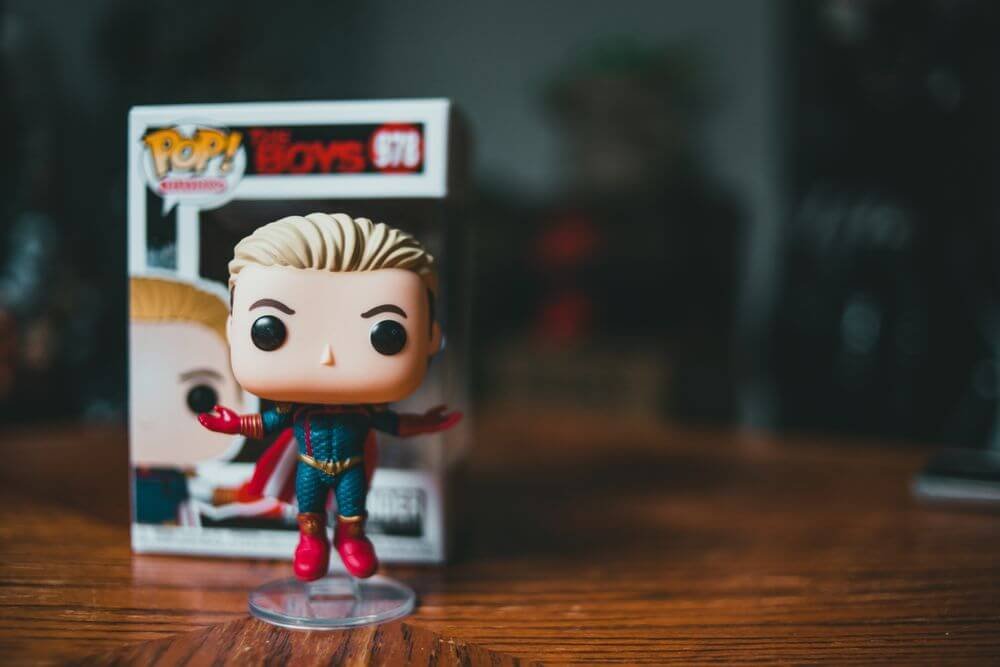
Funko’s recent SEC filings include a phrase that stopped a lot of people in their tracks: “substantial doubt about the Company’s ability to continue as a going concern for the next twelve months.” That language triggered alarm among collectors, investors, and anyone who has ever had a Pop! figure on their desk.
So — is Funko actually going out of business? The honest answer is: not right now, but the financial situation is genuinely serious. This article breaks down what’s actually happening, how Funko got here, what the numbers show, and what it all means if you collect their products or hold their stock.
Funko Is Not Closed — But the Risk Is Real
As of 2025, Funko is still operating. Products are still shipping. You can still walk into a Target or Barnes & Noble and find Pop! figures on the shelf. The company hasn’t filed for bankruptcy, and no shutdown has been announced.
But the going-concern language in their SEC filings is not something you ignore. It signals that — without meaningful improvement — the company may struggle to meet its financial obligations within the next year.
Think of it like a household that can still pay the bills today, but has nearly maxed out its credit cards and is watching its income fall. Nobody is getting evicted tomorrow. But the math stops working if nothing changes.
Media coverage has swung between dismissing the risk entirely and treating it like a confirmed shutdown. Neither is accurate. The filing is a required disclosure, not a death notice — but it does reflect real financial strain that can’t be waved away.
How Funko Got Into This Position
Funko’s rise was fast and built on licensed pop-culture figures — mostly the now-iconic vinyl Pop! line. The company went public in 2017 after years of explosive growth, with figures covering everything from Marvel characters to niche TV shows.
The problem was that growth created overconfidence in demand. Funko kept producing at high volume even as the market for collectibles became saturated. Retailers started getting cautious. Consumers moved on to the next thing. But the inventory kept piling up.
In 2023, reports emerged that Funko destroyed somewhere around $30–35 million in unsold inventory. The reason: warehouse storage costs had become more expensive than just writing off the product and scrapping it. That’s a painful signal of how badly supply had outpaced demand.
The company now carries over $240–250 million in debt, much of it accumulated while financing growth that didn’t produce sustainable profits. On top of that, Funko has cycled through multiple CEOs, which points to ongoing instability at the board and strategy level. As of mid-2025, Josh Simon holds the CEO role.
None of this happened overnight. It’s the result of years of chasing volume without building the financial foundation to support it.
What the Q3 2025 Numbers Actually Show
The most recent quarterly results give a clearer picture of where Funko stands right now. In Q3 2025, net sales came in at roughly $250 million — down approximately 14% compared to the same period the year before. The company posted a net loss of around $1 million for the quarter.
That’s a small loss in dollar terms, but it’s still a loss, and the revenue trend is moving in the wrong direction. Domestic sales have been hit harder than global sales — domestic revenue was down roughly 20% year-over-year in a recent quarter, compared to a global decline of around 14%.
Some analysts described Q3 as “better than expected,” which sounds encouraging until you realize Q2 was very weak. Beating a bad quarter doesn’t mean the business has turned around.
Several pressures are converging at once. Tariffs on goods manufactured overseas have increased costs. Retailers are tightening inventory orders, which means fewer units moving through the supply chain. And consumer demand for collectibles has softened — Funko no longer has the same shelf-dominance it had at its peak.
What “Going Concern” Actually Means for a Public Company
When a public company’s auditors or management include “going concern” language in an SEC filing, it’s not optional. Under accounting rules, management is required to disclose when there is substantial doubt about the company’s ability to operate for the next 12 months. It’s a compliance requirement, not a voluntary warning.
The phrase reflects concerns about liquidity — whether the company has enough cash and credit available to cover near-term obligations — and whether it might breach debt covenants if conditions don’t improve.
Importantly, companies with going-concern warnings continue operating all the time. The warning doesn’t mean closure is inevitable. What it does mean is that something needs to change. Common paths forward include:
- Refinancing or restructuring existing debt
- Raising new capital through stock or debt issuance
- Cutting costs and restructuring operations
- Selling assets or entire business units
- Being acquired by a larger company
Funko has specifically warned that if it cannot raise capital or improve its financial results, it risks defaulting on its existing loans. That’s the core of the risk — not that they’ll shut down next month, but that the window to fix things is narrowing.
What Are the Realistic Scenarios From Here?
No one outside of Funko’s board and lenders knows exactly how this plays out. But based on what’s publicly known, there are a few plausible paths.
Turnaround Through Cost Cuts and Better Sales
Funko could stabilize by managing inventory more tightly, focusing on profitable licenses rather than sheer volume, and improving its cost structure. Q3 showing a small improvement over Q2 suggests the decline might slow. But reversing it entirely is a different challenge.
Debt Restructuring or New Capital
Refinancing the existing debt load or bringing in new investors would buy the company time. This is a realistic option, especially if lenders prefer a managed restructuring over a default scenario.
Acquisition
A larger toy company or private equity firm could buy Funko for its brand recognition and licensing relationships. This is seen by many observers as a plausible outcome if things deteriorate further. In that case, Funko products might continue under new ownership — possibly in a leaner, more focused form.
Bankruptcy and Restructuring
A Chapter 11 filing would allow the company to keep operating while reorganizing its debt. It’s disruptive, but it doesn’t automatically mean the brand disappears. Many recognizable companies have gone through Chapter 11 and continued afterward.
A full liquidation — where everything shuts down and assets are sold off — is the most extreme outcome and considered unlikely given Funko’s brand value and licensing portfolio.
What This Means for Collectors and Investors
If you collect Funko products, the short-term picture is straightforward: new releases are still happening, and major retailers are still stocking them. Your collection isn’t suddenly worthless.
Medium-term, there’s real uncertainty. A major restructuring or ownership change could affect which licenses get renewed, how many SKUs get produced, and how widely products are distributed. If you’re buying new figures as investments, that uncertainty is worth factoring in.
On secondary market values — it’s genuinely hard to predict. Common figures that were overproduced may decline in value as casual interest fades. But rare exclusives, limited convention figures, or early-run pieces tied to enduring franchises tend to hold up better, especially if production slows or stops entirely. Scarcity and nostalgia have propped up many discontinued toy lines over the years.
For investors, the stock picture is more straightforward: this is a high-risk, speculative equity. Reports indicate the stock was down around 75–80% year-to-date at one point in 2025. Going-concern language tends to suppress valuations, and the path to recovery involves multiple things going right simultaneously.
If you’re researching business risk management more broadly, resources like StartBusinessPros cover how companies navigate financial pressure, restructuring, and market positioning in practical terms.
The Honest Bottom Line
Funko is not going out of business today. But the company has disclosed — formally, through its SEC filings — that there is serious doubt about its ability to keep operating over the next 12 months without meaningful improvement.
The debt load is heavy. Revenue is declining. The retail environment is difficult. And years of overproduction created problems that are still being worked through.
That said, total collapse is not the most likely outcome. Acquisition, restructuring, or a combination of cost cuts and new financing could keep the brand alive — potentially under different ownership. The Funko Pop! name carries enough recognition that there’s real business value worth preserving, even if the current corporate structure doesn’t survive intact.
What collectors and investors should avoid is both extremes: assuming everything is fine because products are still on shelves, or assuming the company is weeks away from shutting its doors. The reality sits uncomfortably in between — and that’s where it will stay until the company either closes the gap or runs out of runway.
Read Also:
